
A written PO protects both sides. The supplier knows what to send, and you have a record of what was agreed. The vendor, items and prices in the sample are made up.
How the template works
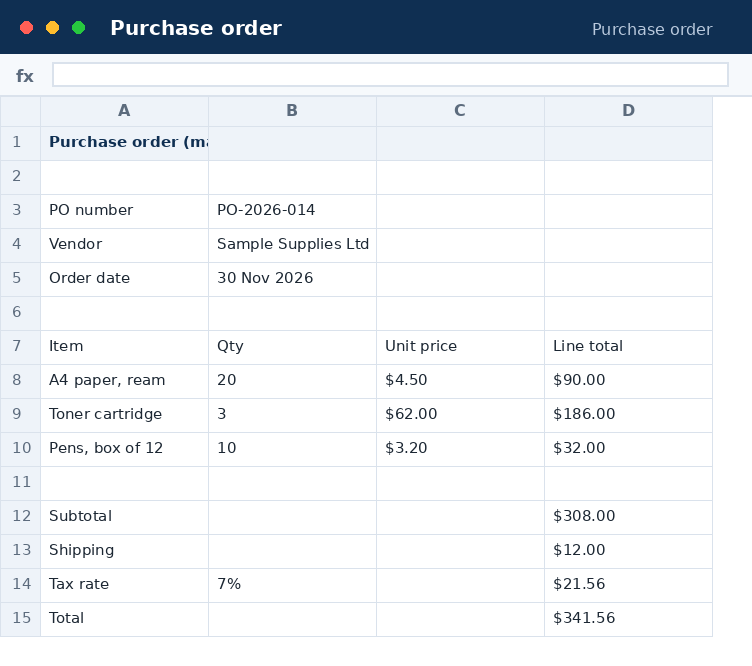
The Purchase order sheet has a PO number, vendor and order date, then a table of Item, Qty, Unit price and Line total. Line total is =B8*C8. Subtotal is =SUM(D8:D10). Tax is =D12*B14, subtotal times the tax rate in B14. The total is =D12+D13+D14. In the sample, the subtotal is $308.00, shipping is $12.00, tax at an example rate of 7% is $21.56, and the total is $341.56.
How to use it
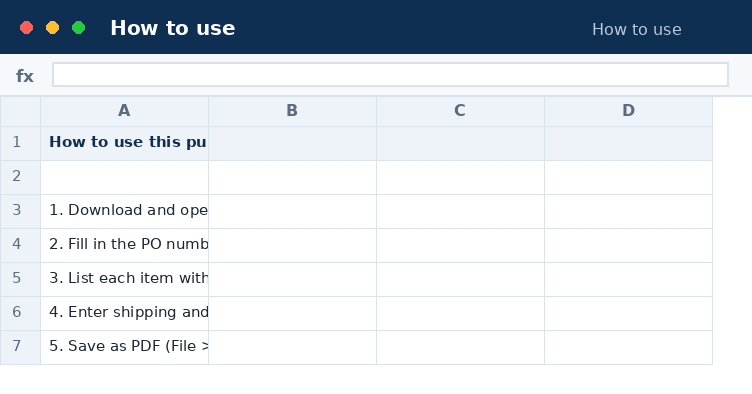
1. Download the xlsx. 2. Fill in your PO number, the vendor and the date. 3. List each item with its quantity and the agreed unit price. 4. Enter the shipping cost and your own tax rate. 5. Save as PDF and send it to the vendor before they ship.
What a PO should include
Add delivery address, delivery date and payment terms if they matter to you. Number your orders in sequence so each one is easy to find later. When the goods arrive, check them against the PO before you pay the invoice.
Related
Selling instead of buying? Use the quote template. When you bill customers, see the free invoice template for Google Sheets. More files: Excel templates for small business.
Download the free template
The bottom line
Put every order in writing, even small ones. It takes two minutes and prevents most disputes.